
CPU vs GPU is one of the most common comparisons when choosing a PC, and the two chips do very different jobs. The processor handles general instructions and decision making, while the graphics card handles huge numbers of similar calculations at once. Understanding the split helps you spend your budget where it makes the biggest difference.
CPU vs GPU: The Core Difference
A processor has a small number of powerful cores designed to handle varied tasks quickly, one after another. A graphics card has thousands of simpler cores built to work in parallel. Think of a few expert problem solvers compared with a large team repeating the same task. Both are essential, and neither replaces the other.
What Each One Does
- Processor: runs Windows, apps, game logic, physics, AI and input handling.
- Graphics card: draws frames, lighting, shadows and textures, and speeds up some video and AI work.
- Memory: the processor uses system RAM, while the graphics card has its own video memory, called VRAM.
The Wikipedia page on graphics processing units explains the parallel design in more detail.
CPU vs GPU For Gaming
For most games, the graphics card has the largest effect on frame rate and visual quality, especially at 1440p and 4K. The processor matters more at 1080p with high refresh rates, and in strategy, simulation and large multiplayer games. A weak chip on either side can hold the other back, which is called a bottleneck.
CPU vs GPU For Work And Streaming
Office tasks, spreadsheets and browsing rely mostly on the processor. Video editing, 3D rendering and some AI tools use both, often leaning heavily on the graphics card. Streamers benefit from a capable processor plus a modern graphics card with a hardware encoder, which is why a streaming PC is usually well balanced.
Finding The Right Balance
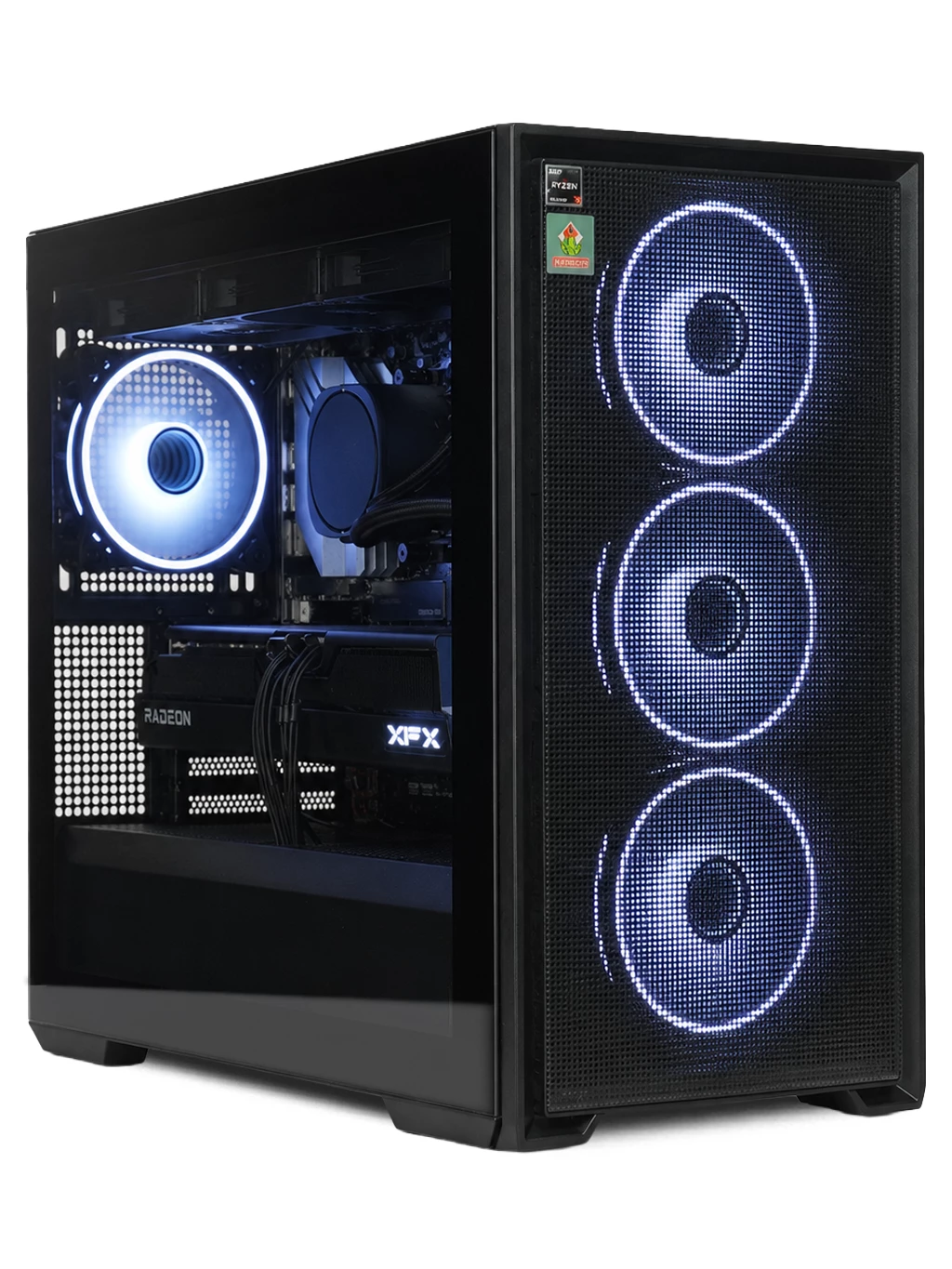
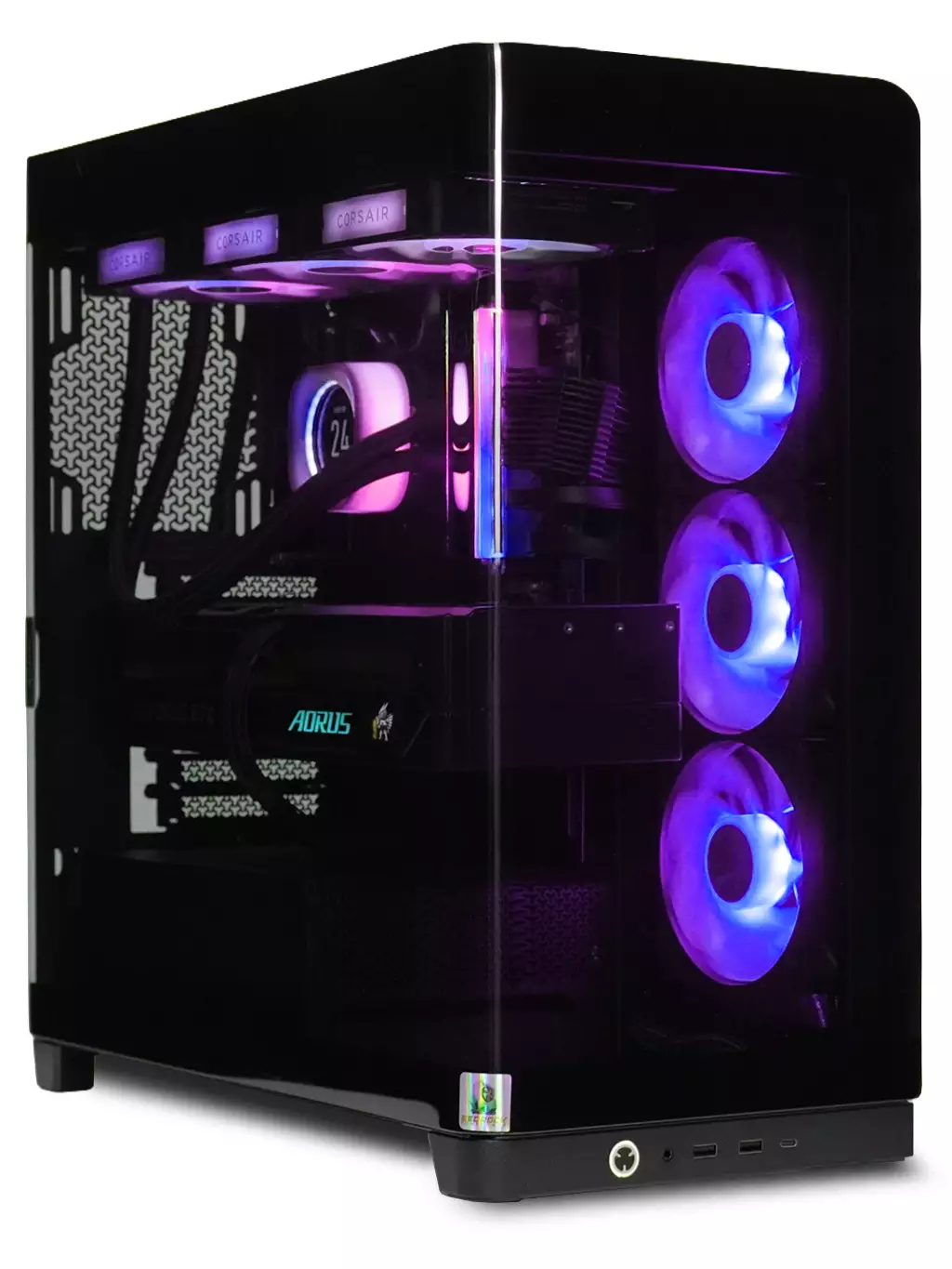
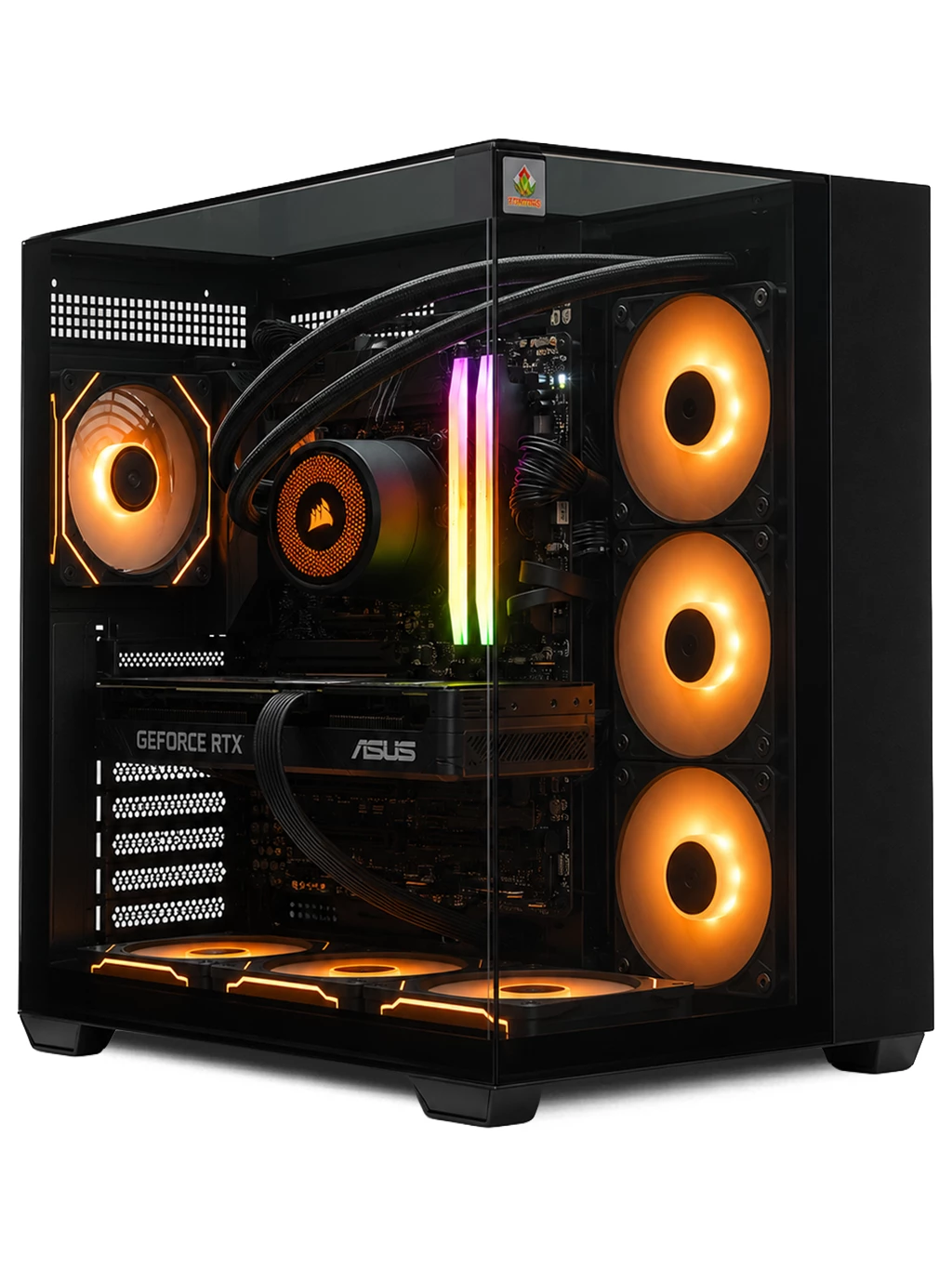
The CPU vs GPU decision is really about pairing them sensibly. In our range, the Orion Gaming PC matches a Ryzen 5 7500 with an RX 9060 XT 16GB, while the Saturn Gaming PC pairs a Ryzen 7 with an RX 9070. For top-end 4K, the Bedrock Amethyst Gaming PC combines a Ryzen 7 9800X3D with an RTX 4090 24GB. Compare more in our 4K gaming PCs.
CPU vs GPU FAQs
Can a GPU replace a CPU?
No. Every PC needs a processor to run the operating system and programs. The graphics card supports it with specialised work.
Which should I upgrade first?
For gaming, the graphics card is often the better first upgrade, unless monitoring shows the processor is maxed out.
Does CPU vs GPU matter for office PCs?
Less so. Office work relies mainly on the processor, so integrated graphics are usually enough for documents, email, video calls and multiple monitors.
Want help weighing up CPU vs GPU for your next build? Contact our team or browse our gaming PCs.